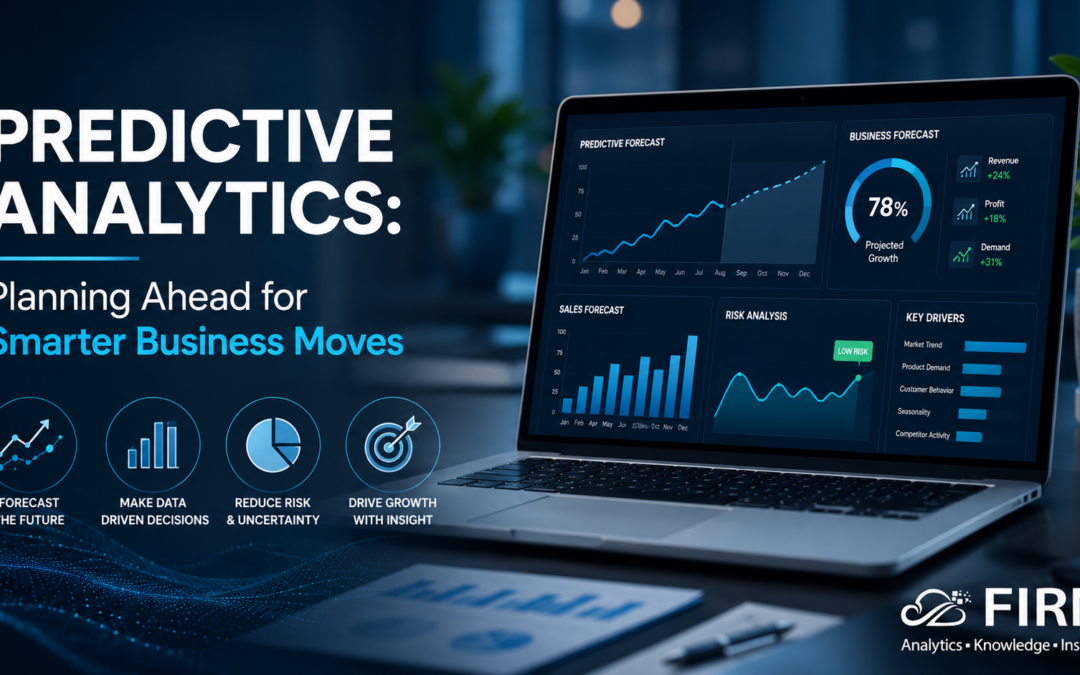
Predictive analytics gives businesses a better way to plan when the old “wait for the report” approach isn’t moving quickly enough. Instead of only showing what’s already happened, it helps teams identify patterns, forecast likely outcomes, and respond before small shifts become bigger problems.
It’s not about pretending any tool can predict the future perfectly. It’s about using the data a business already has more intelligently, so decisions are based on stronger signals, clearer trends, and fewer last-minute surprises.
Why Businesses Are Paying More Attention to Predictive Analytics
Businesses generate enormous amounts of information every day, but having data and using it effectively are two very different things. Plenty of organisations still rely heavily on static reports that explain what happened after the useful moment has already passed.
Predictive analytics changes the role that data plays inside a business. Instead of acting like a historical archive, data becomes part of day-to-day planning and operational decision-making.
A few areas where predictive analytics tends to make the biggest impact include:
Forecasting Demand More Accurately
Demand rarely changes without warning signs. Customer behaviour, buying patterns, seasonal fluctuations, and operational trends usually leave clues long before the shift becomes obvious in monthly reporting.
Predictive analytics helps businesses identify those signals earlier, making it easier to prepare staffing, stock levels, budgets, and operational capacity ahead of time instead of reacting under pressure later.
Reducing Operational Surprises
Unexpected issues are expensive, particularly when they build quietly over time. Predictive reporting can help businesses identify patterns linked to delays, inefficiencies, customer churn, or supply chain disruption before those problems start affecting performance more seriously.
That earlier visibility gives teams more room to respond properly instead of rushing into short-term fixes that create new problems somewhere else.
Improving Financial Planning
Financial forecasting becomes far more reliable when businesses stop relying solely on previous performance and start incorporating live operational trends into the process.
Predictive analytics allows leadership teams to build forecasts using a wider picture of business activity, helping improve budgeting, cash flow planning, revenue forecasting, and investment decisions.
Supporting Faster Decision-Making
One of the biggest operational advantages of predictive analytics is speed. When businesses have clearer visibility into likely outcomes, decisions become easier to make confidently.
That does not mean removing human judgment from the process. It simply means teams spend less time debating what might happen and more time deciding what to do about it.
Predictive Analytics Is Only as Good as the Data Behind It
This is usually the point where businesses realise the software itself is only part of the story.
Predictive analytics depends heavily on data quality, consistency, and integration. If information is duplicated across systems, defined differently between departments, or missing entirely, forecasting accuracy drops quickly. A predictive model pulling from disconnected datasets can end up creating more confusion than clarity.
That’s why businesses investing in predictive reporting often need to strengthen their wider data infrastructure at the same time.
Some of the most common issues include:
- Sales and finance teams using different reporting definitions
- Operational systems that do not communicate properly
- Manual spreadsheet processes creating duplicated data
- Inconsistent customer records across platforms
- Reporting pipelines that rely heavily on manual intervention
These problems may sound small individually, but together they create unreliable forecasting environments. Predictive analytics works best when businesses have connected systems and structured reporting foundations supporting it underneath.
What Effective Predictive Reporting Actually Looks Like
A lot of businesses imagine predictive analytics as complicated dashboards full of technical charts. In reality, the most effective predictive reporting is usually the clearest.
Good predictive reporting helps businesses answer practical questions quickly:
- Which customers are showing signs of churn?
- Where is demand likely to increase next quarter?
- Which operational areas are creating delays?
- Are costs trending towards a future issue?
- Which products or services are likely to underperform?
- Where should resources be prioritised first?
The goal is not to overwhelm teams with endless data points. It’s to create reporting environments that help people act earlier and plan more confidently.
At FIRN, we help businesses build reporting systems that support exactly that. Instead of producing dashboards that look impressive but rarely get used properly, we focus on creating practical reporting environments that fit naturally into how teams already work.
Common Mistakes Businesses Make with Predictive Analytics
Businesses often assume predictive analytics starts with buying new software. In reality, the bigger challenge is usually getting the surrounding systems and reporting processes into a shape that can support it properly.
A few common mistakes tend to appear repeatedly:
- Treating Predictive Analytics Like a Standalone Tool: Predictive reporting works best when it’s integrated into wider operational reporting, not sitting separately from the rest of the business. Forecasts need context, consistency, and shared visibility across teams.
- Ignoring Data Quality Problems: A forecasting model cannot compensate for poor-quality data forever. If reporting already requires constant checking and correction, predictive analytics will usually magnify those issues rather than solve them.
- Building Overly Complicated Dashboards: Some reporting environments become so technical that nobody outside the analytics team wants to use them. Predictive reporting should make decisions easier, not create another layer of confusion.
- Focusing on Reporting Instead of Action: The purpose of predictive analytics is not simply to produce forecasts. It’s to support better operational decisions. Businesses get the most value when predictive insights are directly tied to planning, strategy, and everyday processes.
Why Predictive Analytics Matters More as Businesses Grow
As businesses scale, reporting complexity tends to grow with them. More systems get introduced, departments become more specialised, and decision-making starts relying on larger volumes of data moving between teams.
Without a stronger forecasting structure in place, businesses often become increasingly reactive as they grow. Teams spend more time correcting reporting inconsistencies, checking figures manually, and trying to explain operational surprises after they happen.
Predictive analytics helps reduce that pressure by creating earlier visibility across the organisation. Instead of waiting for issues to appear in end-of-month reporting, businesses can monitor trends continuously and respond sooner.
That becomes especially valuable for organisations managing growth, expanding operations, or dealing with fast-moving customer demand. The larger the business becomes, the more expensive delayed visibility tends to get.
Planning Ahead Starts with Better Data
Predictive analytics is not really about predicting the future perfectly. No software can do that. What it can do is help businesses reduce uncertainty, spot patterns earlier, and make decisions with stronger visibility behind them.
At FIRN, we help businesses build the reporting structures, connected systems, and data environments that make predictive analytics genuinely useful in practice. The goal is not simply more data. It’s better visibility, stronger forecasting, and reporting that helps businesses stay ahead instead of constantly reacting after the fact.
If your reporting setup still feels heavily focused on explaining yesterday’s problems, now might be the right time to start planning further ahead.
FAQs
What is predictive analytics in simple terms?
Predictive analytics uses existing data to spot patterns and forecast what’s likely to happen next. It helps businesses plan earlier instead of only reacting once something has already changed.
Is predictive analytics the same as business intelligence?
Not quite. Business intelligence usually explains what has happened, while predictive analytics looks at what may happen next. The two work best together.
Do businesses need perfect data first?
No data is perfect, but it does need to be reliable enough to trust. Clean, connected data makes predictive analytics much more accurate and useful.
Can predictive analytics help smaller businesses?
Yes. It can help smaller businesses forecast demand, manage resources, spot customer trends, and make better planning decisions without relying on guesswork.
How can FIRN help with predictive analytics?
FIRN helps businesses structure their data, improve reporting, and build predictive analytics into systems that teams can actually use day to day.