Good businesses understand where they have been and what is happening now. Great businesses use that same data to get ahead of what is coming next. Without that forward view, reports explain last quarter, dashboards flag last month’s problems, and spreadsheets quietly multiply in folders nobody wants to open again. By the time the numbers reach the meeting, everyone already suspects the answer anyway.
Forward-looking software changes that. Instead of stopping at what has already happened, it helps businesses anticipate demand, spot patterns earlier, predict operational risks, and make decisions before problems start costing money. Predictive analytics sits at the centre of that shift, but it only works properly when the data behind it is clean, connected, and built to hold up.
Why Businesses Are Moving Towards Forward-Looking Software
Traditional reporting still matters, but it can’t be the whole picture. When a business only looks backwards, there’s always a delay between what’s happening and how quickly the team can respond. That delay can get expensive fast, especially when stock levels start drifting, customer churn appears too late, or operational issues quietly become normal.
Forward-looking software helps close that gap by turning data into earlier warning signs, clearer forecasts, and better-timed decisions. Predictive analytics is especially useful because it doesn’t just show what happened; it helps businesses understand what’s likely to happen next.
- Anticipating demand before it shifts: Predictive analytics can help businesses spot changes in buying patterns, seasonal trends, or customer behaviour before they show up as a problem in monthly reports. That means stock, staffing, and planning can be adjusted earlier instead of rushed later.
- Spotting risks before they become expensive: From customer churn to operational delays, forward-looking software can flag patterns that suggest something’s starting to slip. That gives teams time to act while there’s still room to do something useful.
- Forecasting revenue with more confidence: Instead of relying on guesswork or last year’s figures with a hopeful percentage added on top, businesses can use live and historical data together to build more reliable forecasts.
- Making reporting more useful day to day: Dashboards shouldn’t just explain what went wrong after the fact. With the right data behind them, they can help teams prioritise actions, understand likely outcomes, and make decisions earlier.
The catch is that predictive systems are only as good as the data feeding them. If information is inconsistent across departments, duplicated between platforms, or missing entirely, forecasting becomes unreliable very quickly. That’s why successful forward-looking software integration needs more than the software itself. Businesses need clean data structures, reliable reporting pipelines, and systems that properly communicate across the organisation.
How FIRN Helps Businesses Build Predictive Analytics Properly
Predictive analytics sounds impressive in theory, but a lot of businesses struggle when it comes to applying it in practice. The issue usually is not the software itself. It’s that the surrounding systems were never built to support the kind of clean, connected data that predictive tools rely on.
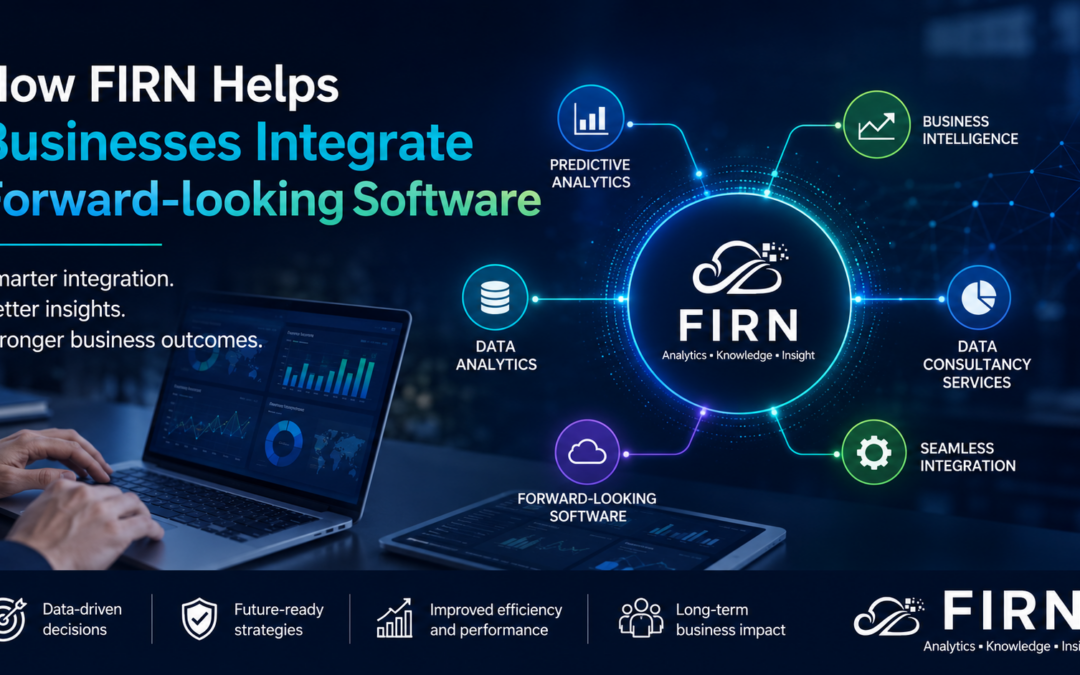
At FIRN, we help businesses bridge that gap. Instead of layering forecasting tools on top of disconnected systems and hoping for the best, we focus on building the structure underneath that makes forward-looking reporting reliable, scalable, and genuinely useful day to day.
- Data warehousing that supports long-term reporting: Pulling data directly from operational systems usually creates reporting gaps, duplicated figures, and endless manual workarounds. We help businesses build structured data warehousing environments that support cleaner forecasting and more consistent reporting.
- Business intelligence that’s easier to act on: Predictive insights are not particularly useful if nobody understands them. FIRN helps businesses create clearer business intelligence dashboards and reporting systems that make trends, risks, and forecasts easier to interpret quickly.
- Power BI consulting and dashboard optimisation: Many businesses already use Power BI, but their reporting setup has usually grown in stages without much structure behind it. We help streamline dashboards, automate reporting, and integrate predictive insights in a way that feels practical rather than overly technical.
- Data consultancy that fixes the underlying problems: Sometimes the issue is not the software at all. It’s inconsistent definitions, disconnected systems, duplicated records, or reporting processes that have slowly become patchwork over time. We help businesses identify where those issues are coming from, so predictive analytics has something reliable to work with.
From Reactive Teams to Proactive Ones
One of the biggest changes businesses notice after integrating forward-looking software is that teams stop constantly playing catch-up. Instead of reacting to problems after they’ve already affected performance, departments can plan around what’s likely coming next.
That shift has a noticeable effect across the business. Operations teams can prepare for demand changes earlier instead of scrambling later. Sales teams can spot trends before they fully develop. Leadership gets clearer visibility into where pressure points are building, rather than discovering them halfway through a quarterly review.
It also changes the relationship people have with reporting itself. Data stops feeling like something that only exists to explain problems after the fact. With cleaner systems and stronger predictive insights behind it, reporting becomes something teams actively use to guide decisions, prioritise work, and plan more confidently.
Build a Data Setup That Looks Ahead
Forward-looking software is not about adding more dashboards for the sake of it. It’s about giving businesses clearer visibility, stronger forecasting, and systems that help teams act earlier instead of reacting later. When predictive analytics is supported by clean, connected data, it becomes much easier to plan confidently without constantly second-guessing the numbers.
At FIRN, we help businesses build the foundations that make that possible. If you’re looking to make your reporting more proactive, scalable, and genuinely useful day to day, reach out to our team to see how we can help.
Forward Looking Software FAQs
Is predictive analytics only useful for large businesses?
Not at all. A lot of smaller and mid-sized businesses actually benefit quickly because they often feel operational pressure sooner. Predictive analytics can help with everything from forecasting stock levels to spotting customer trends earlier, even without massive amounts of data.
What’s the difference between predictive analytics and standard reporting?
Standard reporting explains what has already happened. Predictive analytics uses historical and live data together to identify patterns, forecast likely outcomes, and highlight risks or opportunities before they fully develop.
Does forward-looking software replace business intuition?
No, it supports it. Experienced teams still understand their industry better than any dashboard ever will. Predictive analytics simply gives businesses stronger evidence, earlier visibility, and fewer blind spots when making decisions.
Why do predictive analytics projects sometimes fail?
Usually because the data underneath is inconsistent or disconnected. If systems are not properly integrated, forecasts become difficult to trust. That’s why clean data structures and reliable reporting pipelines matter just as much as the software itself.
Can forward-looking reporting work with existing systems?
In many cases, yes. Businesses do not always need to replace everything they already use. The bigger priority is usually improving how systems connect, how data is structured, and how reporting flows across the organisation.